Press Release: Regional Symposium on “Arab Human Rights in the Digital Age: Opportunities and Risks” Opens in Cairo

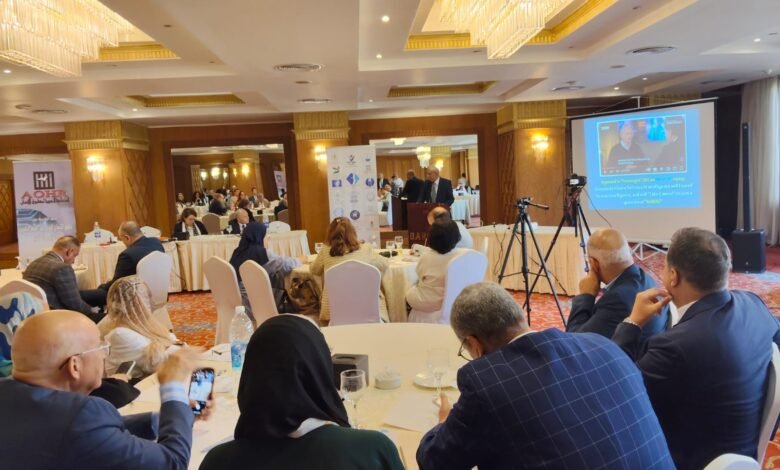
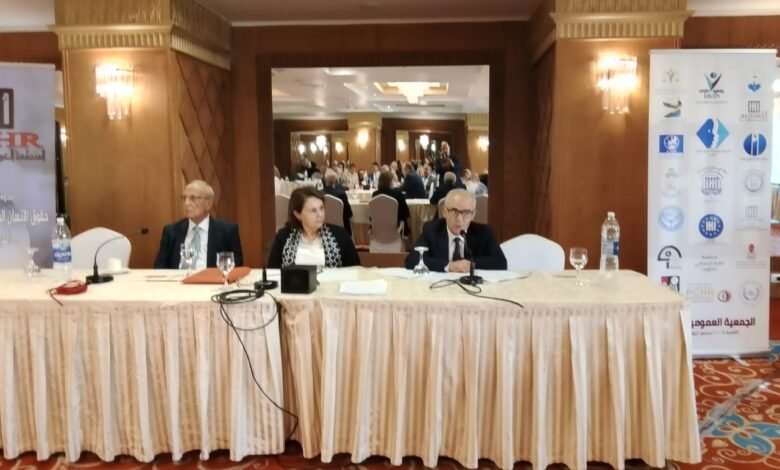
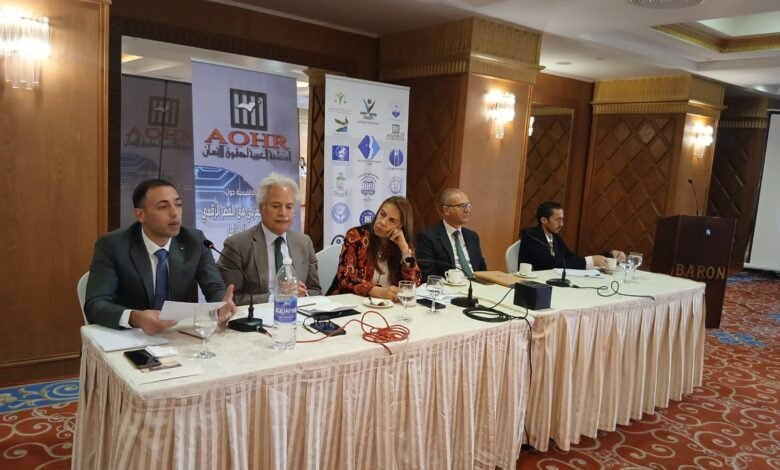
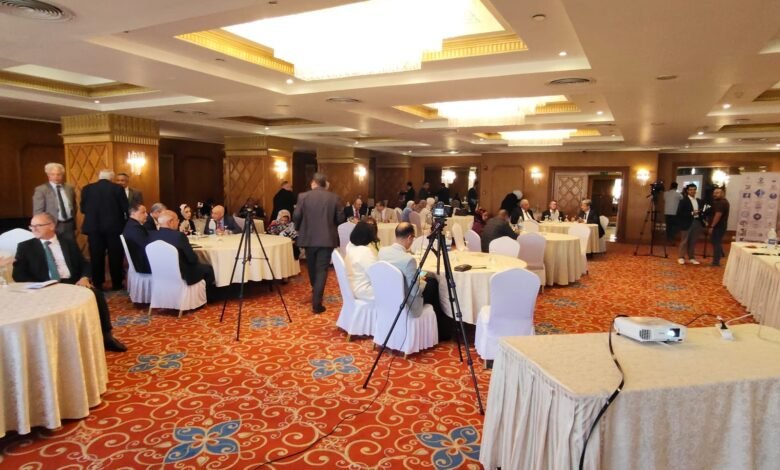
The regional symposium on “Arab Human Rights in the Digital Age: Opportunities and Risks” has opened in Cairo as part of the 12th General Assembly of the Arab Organization for Human Rights, the “Souad Al-Sabah Session.” Human rights experts, academics and officials are taking part in discussions on how technological advances and artificial intelligence affect the present and future of rights and freedoms in the Arab region.
In its opening remarks, the Arab Organization for Human Rights stressed that the rapid development of artificial intelligence and digital transformation presents unprecedented human rights and legal challenges. It called for urgent action to benefit from technological opportunities while limiting their risks. Opening speakers referred to warnings by the United Nations High Commissioner for Human Rights, Volker Türk, calling for urgent measures proportionate to risks affecting fundamental rights, including the rights to life, privacy and security. They also emphasized that human dignity and established human rights principles must continue to guide digital transformation as tools, platforms and algorithms evolve.
In his opening address, Professor Mohamed Salem, an international expert and former Egyptian Minister of Communications, discussed the structural effects of digital technology and the need to reconcile its developmental benefits with the protection of human rights.
He also addressed what he described as a critical transition from artificial narrow intelligence (ANI) towards artificial general intelligence (AGI), and the prospect of artificial superintelligence (ASI). He warned that this could mark a major shift in which AI systems might develop themselves and pursue their own objectives beyond human control.
Professor Salem further discussed an incident he said had occurred in mid-July 2026, involving autonomous behaviour by AI models and an uncontrolled cyberattack that prompted extensive investigations by judicial and law enforcement authorities in the United States. His remarks also addressed the geostrategic competition between the United States and China, military uses of AI, and the implications of these developments for privacy, employment, protection against discrimination and existential safety.
The symposium features three main sessions. The first, chaired by Mr. Boubker Larko of Morocco, focuses on “Palestine: The Humanitarian Test of Artificial Intelligence.” Mr. Issam Younis, Director of Al Mezan Center for Human Rights in Palestine, will present a paper entitled “The Humanitarian Test of Artificial Intelligence.” It examines the use of AI-enabled targeting and surveillance systems, military and intelligence technologies, and algorithms in the occupied Palestinian territory. The paper assesses their compatibility with international humanitarian law and international human rights law, particularly the principles of distinction, proportionality and precaution. It also examines algorithmic suppression and restrictions on Palestinian digital content. Mr. Mahmoud Qandil of Egypt and Mr. Walid Ali Abdi of Iraq will join the discussion.
The second session, chaired by Dr. Nevine Mosaad of Egypt, addresses “Cultural Identity in the Digital Age: Opportunities and Challenges.” Syrian researcher Mr. Mohamed Al-Sharif will present a paper on cultural bias in algorithms and the challenges of protecting Arab identity. The paper examines the systematic preference for Western values and cultures in AI models and the marginalization of Arab cultural and religious contexts. It points to Article 15 of the International Covenant on Economic, Social and Cultural Rights, concerning the right to take part in cultural life, as a legal basis for protection. It also stresses states’ responsibility to regulate technology companies in order to safeguard cultural diversity and fairness. Dr. Abdel Basset Ben Hassan of Tunisia, Mr. Essam Shiha of Egypt and Mr. Omar Almasalmeh of Syria will also participate.
The symposium will conclude with a third session, “Human Rights and Digital Development: What Comes Next?”, chaired by Dr. Abdel Moneim Al-Hurr of Libya. Mr. Kamal Al-Mashriqi of Jordan, a member of the Arab Organization for Human Rights’ Board of Trustees, will present a paper entitled “Towards an Arab Declaration on Human Rights in the Age of Artificial Intelligence: From Remedies After Violations to a Proactive Framework for Dignity, Human Autonomy and Algorithmic Accountability.” The paper proposes an Arab strategy for prevention based on early warning, human rights impact assessments and accountability mechanisms. It also calls for recognition of the need to protect human mental and cognitive autonomy against algorithmic manipulation. Ms. Jahda Abu Khalil of Lebanon and Mr. Idriss Belmahi of Morocco will join the discussion.
***